


11
AprAffidavit Requirements in Ontario Courts: Avoid Delays With Clear Steps
Affidavit requirements in Ontario courts are the rules that govern how a sworn or affirmed statement must be written, commissioned, and filed. In practice, this means using the right form and format, including a complete jurat, attaching properly labeled exhibits, and swearing or affirming before a commissioner for taking affidavits in person or remotely.
By Kapil Rathod — Principal Lawyer, Rathod Law Firm
Last updated: April 11, 2026
Above the Fold: Why This Guide Matters + What You’ll Learn
This guide shows you how to meet Ontario court affidavit requirements without headaches. Follow our step-by-step checklists to avoid rejected filings, missed motion dates, or adjournments. We cover formats, commissioning, exhibits, service, and common pitfalls across civil, family, Small Claims, immigration, and provincial offense matters.
- Who this helps: Self-represented parties, busy counsel, and anyone preparing evidence for motions, appeals, or applications in Ontario.
- What you’ll get: Clear checklists, plain-English definitions, and examples from immigration, family law, and provincial offense practice.
- Outcome: Confidently prepare, swear/affirm, and file affidavits that courts accept on the first try.
- Support available: Commissioning and notarization at Rathod Law Firm’s Brampton office, plus guidance for filings tied to our core services.
Quick Answer
Affidavit requirements in Ontario courts include proper format, a complete jurat, numbered paragraphs, sworn or affirmed before a commissioner or notary, and labeled exhibits. At our Brampton office (106-2250 Bovaird Drive East), Rathod Law Firm commissions affidavits for family, immigration, and Small Claims filings so your materials are court-ready.
Summary
- Core rules: Use the correct form, clear facts in numbered paragraphs, add a complete jurat, and commission before filing.
- Common uses: Motions and applications in civil and family matters, Small Claims, refugee and immigration appeals, and provincial offense disputes.
- Top risks: Missing exhibits, improper identification, unsigned or undated jurats, and hearsay without source details.
- Fixes: Pre-signing checklist, exhibit cover pages, and a commissioning appointment at Rathod Law.
Local Tips
- Tip 1: If you’re driving to our Brampton office off Bovaird Drive East near Airport Road, bring valid government-issued photo ID for commissioning. Parking fills quickly during weekday mornings.
- Tip 2: Snow or heavy rain can slow courthouse processing; file a day earlier in winter and around long weekends to avoid adjournments tied to service delays.
- Tip 3: For immigration or refugee matters, align affidavit facts with your forms and prior filings. Consistency avoids credibility issues at the tribunal or on judicial review.
IMPORTANT: These tips reflect local logistics and how we support clients who need affidavits commissioned and filed quickly in Ontario.
What Is an Affidavit?
An affidavit is a written statement of facts confirmed by oath or affirmation before a commissioner for taking affidavits or a notary public. Ontario courts accept affidavits as sworn evidence on motions, applications, and some appeals when they meet formal requirements for format, jurat, and exhibits.
At a glance: An affidavit is sworn or affirmed evidence. It must be signed by the deponent and the commissioner/notary, dated, and include the place of commissioning. Attach exhibits with labeled cover pages (e.g., Exhibit “A”). Use clear, numbered paragraphs so judges can reference specific facts.
- Key parts:
- Caption: Court file info and parties.
- Intro paragraph: Who you are and how you know the facts.
- Body: Numbered paragraphs of facts only.
- Jurat: Oath/affirmation statement signed by the commissioner or notary, with date and location.
- Exhibits: Documents referenced in the affidavit, each with an exhibit stamp or cover page initialed by the commissioner/notary.
- Where it’s used:
- Civil motions/applications in the Superior Court of Justice.
- Family Law Rules filings (e.g., parenting, support, property issues).
- Small Claims Court motions and trials for documentary evidence.
- Immigration/refugee appeals and judicial reviews (as part of the record).
- Provincial offense matters (e.g., affidavits of service, officer notes).
- Why swearing/affirming matters: The oath or affirmation makes the statement evidence; false affidavits can lead to perjury or contempt findings.
Affidavit Requirements Ontario Courts: What Judges Expect
Ontario courts expect affidavits to be clear, relevant, and properly commissioned. Use numbered paragraphs, avoid argument, identify sources of information and belief, and attach exhibits with labeled cover pages. Complete the jurat with date, location, and commissioner/notary details to meet formal requirements.
At a glance: Meeting affidavit requirements in Ontario courts boils down to four pillars: form, content, commissioning, and filing/service. If you’re precise on those points, your evidence is far more likely to be accepted without delay or a costly adjournment.
- Form and style:
- Use the court’s required form when applicable (e.g., Family Law Rules forms).
- 12-point legible font, page numbers, and adequate margins aid readability.
- Numbered paragraphs and headings help judges navigate quickly.
- Content quality:
- Stick to facts you witnessed. Keep argument for your factum or submissions.
- When relying on information from others, say so and identify the source.
- Attach true copies of key documents as exhibits and reference them precisely.
- Commissioning:
- Swear or affirm in person or by approved remote commissioning with valid ID.
- The jurat must show date, location (city/province), and the commissioner/notary’s details.
- Do not sign before the appointment. Sign only in the commissioner/notary’s presence.
- Filing and service:
- Serve according to the court’s rules and file proof of service (often by affidavit).
- Follow page limits and deadlines set by the specific court or practice direction.
- Retain originals; courts may require them even after e-filing.
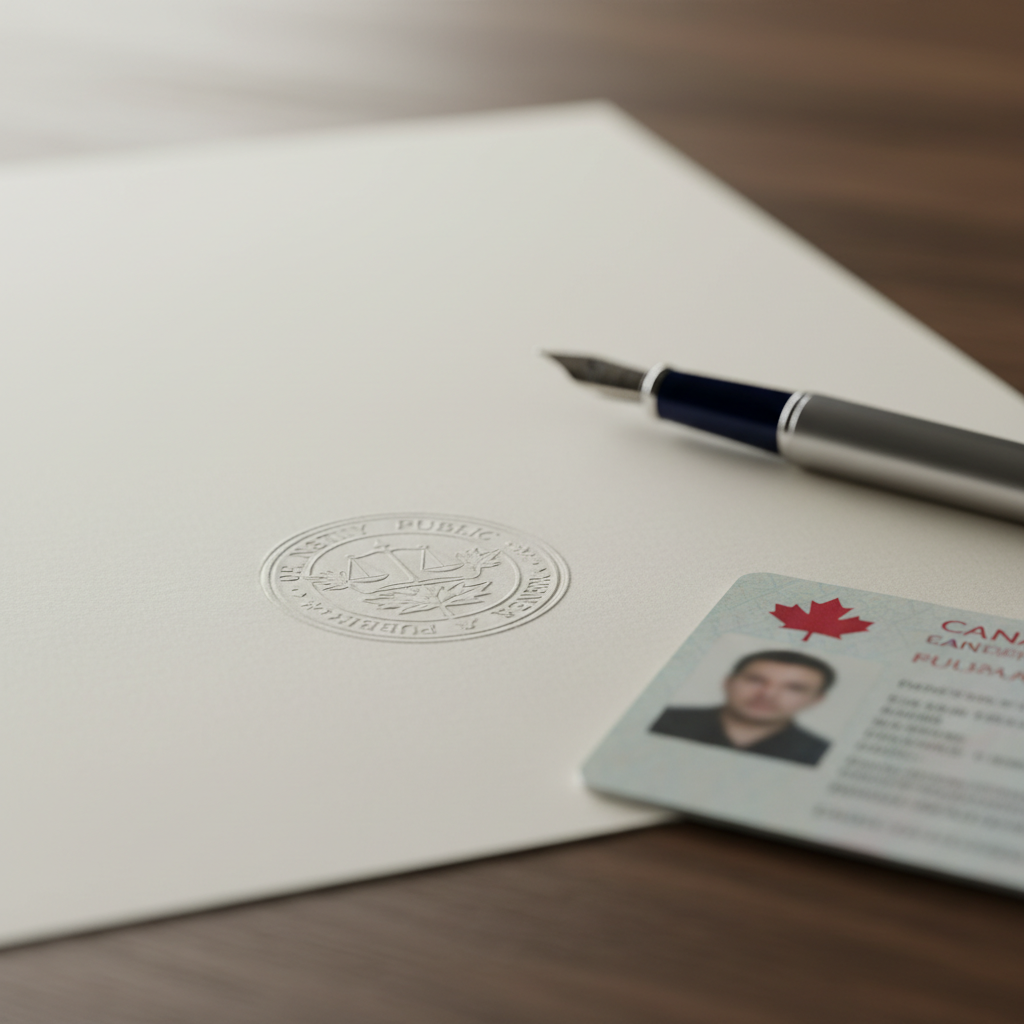
How Affidavits Work in Ontario (Step-by-Step)
Prepare facts, draft in numbered paragraphs, attach exhibits, and book a commissioning appointment. Swear or affirm with valid ID, ensure a complete jurat, then serve and file as the rules require. Keep originals and follow page limits and timelines for your court or tribunal.
At a glance: If you’re organized before commissioning, you’ll avoid redrafting. Use the steps below as your standard operating procedure for Ontario affidavits.
- Define purpose: Identify the motion, application, or hearing and what the affidavit must prove.
- Collect facts and documents: Gather emails, letters, receipts, court orders, and government records that support each point.
- Draft in numbered paragraphs: One fact per paragraph. Use plain language and dates.
- Reference exhibits: Insert cues like “Attached as Exhibit ‘A’ is…” and prepare exhibit cover pages.
- Check hearsay: If based on information and belief, identify the source and why you trust it.
- Book commissioning: Bring valid government-issued photo ID to Rathod Law Firm or arrange approved remote commissioning.
- Swear or affirm: Sign in front of the commissioner/notary, complete the jurat, and initial each exhibit.
- Serve parties: Follow the service method and timeline set by your court or tribunal.
- File with the court: Include the affidavit of service if required, and respect page/size limits for e-filing.
- Keep originals: Retain the original affidavit and exhibits for your hearing and for any cross-examination needs.

Types of Affidavits and When to Use Them
Common Ontario affidavits include affidavits for motions, financial/parenting affidavits under the Family Law Rules, affidavits of service, Small Claims affidavits for documentary evidence, and affidavits supporting immigration or refugee appeals and judicial reviews.
At a glance: Each court or tribunal context has expectations. Match the affidavit style and depth to the purpose and applicable rule set.
- Civil litigation affidavits:
- Evidence for motions or applications in the Superior Court of Justice.
- Often accompanied by a factum and a compendium of exhibits.
- Family law affidavits:
- Parenting, support, or property claims under the Family Law Rules.
- Use the correct family forms and keep tone factual and child-focused.
- Small Claims affidavits:
- Affidavits of service, motions to set aside default judgment, or to admit documents.
- Concise statements with clearly tabbed exhibits work best for deputy judges.
- Affidavits of service:
- Confirm how and when documents were served, by whom, and on whom.
- Include addresses, dates, times, and attach proofs (e.g., courier receipts).
- Immigration and refugee-related affidavits:
- Used in appeal records or on judicial review to contextualize key facts.
- Consistency with forms and prior submissions is critical for credibility.
Best Practices That Keep Affidavits Out of Trouble
Keep affidavits factual, concise, and organized. Number paragraphs, label exhibits, and complete the jurat. Avoid argument and speculation. Align facts with governing rules and deadlines, and commission only after a final proofread to prevent rework.
At a glance: Good affidavits read like timelines of facts, not speeches. They’re easy to cite in oral argument and hold up under cross-examination.
- Clarity and chronology:
- Organize by date or theme and include only facts you can back up.
- Define acronyms and spell out names on first reference.
- Exhibits done right:
- Use exhibit cover pages with letters (A, B, C) and short descriptions.
- Initial each exhibit during commissioning to link them to the affidavit.
- Commissioning hygiene:
- Bring original, unexpired photo ID; ensure names match your documents.
- Don’t staple over signatures; use binder or tabs to preserve edges.
- Filing discipline:
- Follow any page limits and file naming conventions for e-filing.
- Include an index for long exhibits to speed up judicial review.
- Consistency across filings:
- Match facts with pleadings, forms, and prior affidavits.
- In immigration and family contexts, inconsistent detail can undermine credibility.
Tools, Templates, and Resources You Can Use
Use standardized court forms, exhibit cover-page templates, and commissioning checklists. Schedule commissioning with a commissioner or notary, and keep a master index of exhibits. Organized materials speed up filing and reduce rejection risk.
At a glance: Templates keep you consistent; checklists catch mistakes. A 10-minute review against a template often prevents adjournments.
- Core tools:
- Affidavit form (court-specific when required).
- Exhibit cover-page template with lettering and short descriptions.
- Commissioning checklist (ID, unsigned draft, exhibit tabs, appointment).
- Workflow tips:
- Maintain a naming convention: YYYY-MM-DD_Affidavit_[Party]_v_[Party].pdf
- Combine exhibits in logical order and bookmark PDFs for e-filing.
- Keep a digital master index that maps affidavit paragraphs to exhibits.
- Where we help:
- Rathod Law Firm commissions affidavits and statutory declarations in-office or by approved remote means.
- We guide clients on affidavit content for family, immigration/refugee, Small Claims, and provincial offense matters.
Real-World Examples and Mini Case Insights
In practice, strong affidavits are concise, supported by exhibits, and aligned with court rules. The examples below show how courts and tribunals respond better to focused facts than to long narratives or argumentative statements.
At a glance: Short, well-organized affidavits with targeted exhibits consistently perform better than long, unfocused accounts.
- Family parenting motion:
- We structured a 12-paragraph affidavit around a child’s weekly routine, attaching school emails and a parenting plan as exhibits.
- Result: The judge engaged quickly with the timeline and relied on the exhibits to make interim orders.
- Small Claims motion to set aside default:
- Affidavit focused on service confusion, with courier receipts and email thread exhibits.
- Result: Default judgment was set aside; matter proceeded on the merits.
- Refugee appeal record:
- Affidavit aligned with prior forms and country documents, avoiding narrative drift.
- Result: The tribunal accepted the record; the panel focused on credibility issues we flagged with citations.
- Provincial offense dispute (red light):
- Affidavit of service and officer note exhibits clearly established timelines.
- Result: The court admitted the materials promptly, avoiding delay on a busy docket.
Comparison Table: Affidavit vs. Statutory Declaration vs. Letter
Use an affidavit when sworn evidence is required, a statutory declaration when legislation allows an unsworn declaration, and a letter for informal context only. Affidavits and declarations require formal commissioning; letters do not.
| Document Type | Formality | Who Can Take It | Typical Use | Admissibility |
|---|---|---|---|---|
| Affidavit | Sworn/affirmed; jurat required | Commissioner for taking affidavits or notary public | Motions, applications, appeals; affidavits of service | Evidence if rules are met |
| Statutory Declaration | Declared; no oath but formal declaration | Commissioner or notary authorized by statute | Where legislation accepts declarations (non-contentious) | Accepted when statute permits |
| Letter | Informal; no jurat | N/A | Background or context, not sworn evidence | Generally not evidence |
Frequent Mistakes That Trigger Rejection or Delay
The most common affidavit mistakes are unsigned or pre-signed jurats, missing exhibit labels, argumentative tone, and inconsistent facts across filings. Avoid these with a commissioning checklist and a final cross-check against the governing rules.
- Pre-signing the affidavit: Courts may reject it. Always sign in front of the commissioner/notary.
- Hearsay without source: Identify who told you the fact and why it’s reliable.
- Exhibits not initialed: Initial every exhibit with the commissioner/notary during commissioning.
- Incorrect form: Using the wrong family or Small Claims form causes rework.
- Inconsistent details: Dates, names, and addresses must match earlier filings.
- Illegible scans for e-filing: Low-resolution PDFs and sideways pages slow down staff and judges.
Where Affidavits Fit in Our Core Services
Affidavits support many services we deliver: family motions, immigration/refugee records, Small Claims motions, and provincial offense issues. We commission and help structure affidavits so the court or tribunal can review them quickly.
- Immigration and refugee appeals/judicial reviews: We help clients present sworn facts that align with forms and country materials.
- Family law: Parenting and support motions depend on crisp affidavits with exhibits like school records or income documents.
- Traffic and provincial offenses: Affidavits of service and officer document exhibits keep matters moving.
- Notarization and declarations: Fast commissioning for affidavits and statutory declarations at our Brampton office.
Need your affidavit commissioned today? Book a commissioning appointment at our Brampton office. Bring valid government-issued photo ID and unsigned drafts. We’ll ensure your jurat and exhibits meet court expectations.
Step-by-Step: The Pre-Filing Affidavit Checklist
Use this checklist before commissioning and filing. It prevents the most frequent errors that cause rework, adjournments, and avoidable costs.
- Drafting
- Clear purpose statement and relevant facts only.
- Numbered paragraphs; dates and names spelled correctly.
- References to exhibits placed where facts appear.
- Exhibits
- Cover pages labeled Exhibit “A”, “B”, “C” with brief descriptions.
- Documents organized chronologically; sensitive info redacted if appropriate.
- Tabs/bookmarks added for long PDFs.
- Commissioning
- Unsigned draft ready; valid photo ID in hand.
- Jurat completed with date, city, province, name, and capacity of commissioner/notary.
- Each exhibit initialed by both the deponent and the commissioner/notary.
- Filing & Service
- Method and deadline confirmed for your court or tribunal.
- Affidavit of service prepared where required.
- Originals stored safely; e-filing PDFs are clear and properly named.
How This Applies Across Ontario Courts and Tribunals
While each court has its own rules or practice directions, the essentials are the same: clear facts, proper commissioning, labeled exhibits, and on-time service and filing. Tailor the form and tone to the specific forum.
- Superior Court of Justice (Civil): Focus on motion/application affidavits with targeted exhibits.
- Family Law Rules: Use prescribed forms; keep tone child-focused and factual.
- Small Claims Court: Concision and exhibit clarity matter most.
- Tribunals (e.g., IRB) and Federal Court filings: Consistency with forms and prior records is essential.
- Provincial offenses: Affidavits of service and document exhibits keep matters on schedule.
Answer Engine Unit: The 90-Second Primer
Affidavit requirements Ontario courts prioritize can be summarized as: correct form, factual content, complete jurat, and properly labeled exhibits. Commission with valid ID, avoid argument, and file on time. These basics prevent adjournments and improve how judges and tribunals read your case.
- Use numbered paragraphs and one fact per paragraph.
- Identify hearsay and give the source and reason for belief.
- Attach key documents as exhibits with cover pages and initials.
- Complete the jurat with location, date, and commissioner/notary details.
- Serve and file following your court’s timeline and method.
FAQ
These concise answers address the most common affidavit questions we hear from clients preparing filings for Ontario courts and tribunals.
-
How do I sign an affidavit correctly in Ontario?
Sign only in front of a commissioner for taking affidavits or a notary public, after the oath or affirmation is administered. The jurat must include the date, location, and the commissioner/notary’s details. Initial each exhibit with the commissioner/notary so it’s linked to your affidavit.
-
Can I commission an affidavit remotely?
Yes. Approved remote commissioning is available in Ontario when identity is verified and the oath/affirmation is properly administered by audio-video. Ensure you have valid photo ID and a clear, stable connection. We offer commissioning options designed to meet these requirements.
-
What makes an affidavit inadmissible?
Common problems include unsigned or incomplete jurats, exhibits that aren’t labeled or initialed, argumentative statements, and hearsay with no source. Using the proper court form and commissioning checklist will prevent most admissibility issues.
-
Is a statutory declaration the same as an affidavit?
No. Both are formal, but an affidavit is sworn or affirmed and includes a jurat, while a statutory declaration is declared under legislation without an oath. Use an affidavit when sworn evidence is required by the court or rule.
-
Do I need a lawyer to prepare an affidavit?
You can draft your own affidavit, but legal review helps ensure relevance, admissibility, and alignment with the rules. Our team can guide content, commission the document, and integrate it with motion materials and filing requirements.
Related Articles
Explore connected topics that often accompany affidavits in Ontario matters, from service to family and immigration filings. These ideas help you plan complete records.
- How to organize exhibits for e-filing in Ontario courts
- Affidavit of service: what to include and how to prove delivery
- Family Law Rules forms: choosing the right affidavit form for your motion
- Judicial review records: aligning sworn evidence with tribunal materials
Key Takeaways
Affidavit requirements Ontario courts prioritize are straightforward when you plan. Use correct form, facts-only content, complete jurat, and labeled exhibits. Commission with valid ID and file on time. These steps prevent rework and keep your matter moving.
- Affidavits are sworn evidence; declarations and letters are not substitutes when the rules require affidavits.
- Numbered paragraphs, clear exhibits, and a complete jurat are non-negotiable.
- Commission only after a final proofread, then serve and file per the forum’s timelines.
- Rathod Law Firm can commission and coordinate filings from our Brampton office.
Next steps:
- Use the pre-filing checklist above to finalize your draft.
- Book a commissioning appointment at our Brampton office.
- Prepare service and filing packages matched to your court or tribunal.
Ready to move forward? Schedule your commissioning at 106-2250 Bovaird Drive East or request guidance on affidavits for family, immigration/refugee, Small Claims, or provincial offense matters.