


28
MarFamily Sponsorship Requirements Canada: Bring Loved Ones Home
You want to bring your family together in Canada—and you need certainty on family sponsorship requirements in Canada before you act. Here’s the practical, plain-English guide we share with clients across Brampton and the Greater Toronto Area. It walks you through eligibility, documents, steps, and what to do if something goes wrong. If you’re near our office at 106-2250 Bovaird Drive East, Ontario, we can meet in person to review your exact situation.
Overview
- What you’ll learn: Who can sponsor, who can be sponsored, documents you need, timelines, admissibility checks, and appeal options.
- Why this matters: Clear requirements reduce refusals, delays, and stress—and protect your family’s path to permanent residence.
- Who this is for: Spouses/partners, parents and grandparents, and families in Ontario seeking up-to-date, 2026-ready guidance.
- How we help: Rathod Law Firm handles sponsorships, immigration appeals, judicial reviews, and related applications with a client-first approach.
Quick Answer
Family sponsorship requirements in Canada focus on sponsor eligibility (age, status, residency, and financial obligations), the genuineness of the family relationship, and the applicant’s admissibility. If you’re in Ontario, you can meet us at 106-2250 Bovaird Drive East to confirm documents and strategy the same day—Rathod Law Firm handles sponsorships, appeals, and judicial reviews.
Summary
- Core rule set: You must qualify as a sponsor, prove a genuine qualifying relationship, and ensure the applicant passes medical, criminality, and security checks.
- Streams covered: Spouse/common-law/conjugal partner, dependent children, parents and grandparents (PGP), and limited “other relatives” in narrow scenarios.
- Key obligations: Sign an undertaking to financially support the person you sponsor for a fixed period; no social assistance defaults; remain eligible throughout.
- Processing reality: Expect biometrics, medical exams, and background screening; timelines vary by stream and country of residence.
- If refused: Options can include an appeal (where available) or a judicial review—in both, deadlines are strict.
What Is Family Sponsorship?
Family sponsorship is a Canadian immigration pathway that lets eligible permanent residents and citizens sponsor certain family members to become permanent residents. It is designed to keep families together while ensuring newcomers won’t need public assistance during the undertaking period.
- Purpose: Reunite families under clear eligibility rules and financial commitments.
- Outcome: Permanent residence (PR) for the sponsored person if approved.
- Where Rathod Law Firm fits:
- We prepare sponsorship packages (spousal/partner, children, PGP).
- We respond to procedural fairness letters and request records when issues arise.
- We pursue appeals or judicial reviews if a refusal occurs.
Here’s the thing: paperwork errors and weak relationship evidence are common refusal triggers. A detailed, well-organized file can save months—and sometimes years—of delays.
Why Family Sponsorship Requirements Matter
- Prevent refusals: Meeting every requirement up front reduces the chance of credibility concerns and document-related setbacks.
- Shorten timelines: Clean, consistent evidence helps officers make faster decisions.
- Protect appeals: A complete record today strengthens your position if you need to challenge a refusal later.
- Reduce stress: Knowing the rules and the sequence (sponsor eligibility → relationship proof → admissibility) cuts confusion.
- Local advantage: If you’re in Brampton or the GTA, in-person prep at our Bovaird Drive East office helps us resolve issues early.
If you’re unsure about even one eligibility point, address it before you file. Small gaps can snowball into big problems.
Family Sponsorship Requirements in Canada: What You Need
Think of eligibility as three stacked layers: the sponsor’s qualifications, the relationship’s validity, and the applicant’s admissibility. If any one layer fails, the application is at risk.
Sponsor Eligibility (Must-Haves)
- Minimum age: 18 or older at the time you apply.
- Status in Canada: Canadian citizen or permanent resident; citizens living abroad must show intent to return when the family member lands.
- Residency: PR sponsors must reside in Canada when applying and until a decision is made.
- Undertaking commitments:
- Promise to support the sponsored person for a set number of years (varies by category).
- You’re responsible even if circumstances change (e.g., relationship breakdown).
- Financial integrity:
- No outstanding sponsorship undertakings in default.
- No recent social assistance for reasons other than disability.
- Meet income requirements where applicable (e.g., parents and grandparents).
- Other bars: Certain criminal convictions, bankruptcy not discharged, or removal orders can make you ineligible.
Example: A Brampton PR sponsoring a spouse must live in Canada during processing and sign an undertaking. If they previously defaulted on an undertaking, they’ll need to resolve that before filing. We screen these issues in our intake call so you don’t lose time.
Qualifying Relationships (Prove It)
- Spouse/Common-law/Conjugal partner:
- Provide marriage certificate or, for common-law, proof of at least 12 months of continuous cohabitation.
- Show a genuine relationship: photos over time, joint assets, leases, travel records, messages, and affidavits.
- Address prior marriages, cultural practices, and timelines to avoid “marriage of convenience” concerns.
- Dependent children:
- Prove the parent–child relationship and dependency.
- Include custody/consent documents if the other parent is not immigrating.
- Parents and grandparents (PGP):
- Must first receive an “invitation to apply” after submitting an interest to sponsor.
- Meet income thresholds for the required number of years.
- Provide civil status documents and family composition details.
- Other relatives (limited): In narrow cases (e.g., orphaned minor sibling), sponsorship may be possible with strict proof.
Reality check: Weak or inconsistent evidence is the most common issue we remediate. We build a narrative that connects dates, documents, and daily life—so an officer can follow your story in minutes.
Admissibility (Pass the Screens)
- Medical exam: Must pass a medical to ensure no conditions that would render the applicant inadmissible.
- Biometrics: Fingerprints and photo collection to verify identity.
- Police certificates: From every country where the applicant lived for a specified period; ensure they’re recent and correctly issued.
- Security/background checks: Standard screening by authorities.
- Misrepresentation warnings: Accuracy matters—errors or omissions can lead to refusal and penalties.
Tip: Start collecting police certificates early. Some jurisdictions take months, and expired certificates can derail an otherwise strong file.
How Family Sponsorship Works (Step-by-Step)
Every stream follows the same skeleton: qualify → gather evidence → submit forms → complete exams/biometrics → respond to requests → final decision. Here’s a practical view.
1) Confirm Eligibility and Strategy
- Pick the correct stream: Spouse/partner (in Canada or outside Canada), dependent child, PGP, or limited relatives.
- In-Canada vs. outside-Canada route:
- In-Canada class may allow a spousal open work permit while you wait (if eligible).
- Outside-Canada class can be faster in some regions and preserves appeal rights in many cases.
- Quebec: Extra provincial steps apply if the sponsor resides in Quebec.
2) Build the Evidence Package
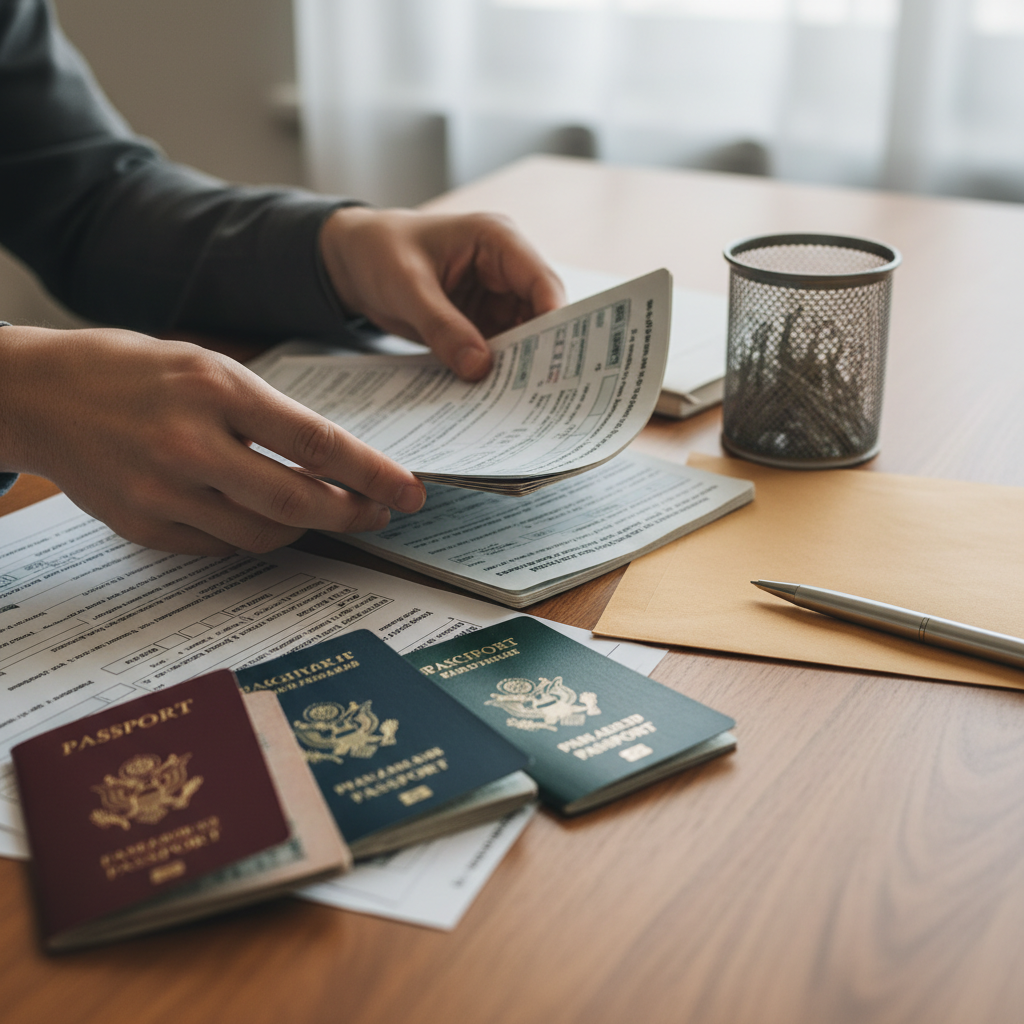
- Identity/civil status: Passports, birth and marriage certificates, divorce decrees if applicable.
- Relationship proof: Cohabitation records, travel stamps, joint accounts, photos with dates and context.
- Financials: Undertaking forms and, if applicable, income proofs for PGP.
- Admissibility docs: Police certificates, medical exam receipts, biometrics appointments.
- Organization: Label sections, paginate, and include a contents sheet with a brief relationship timeline.
3) Complete the Right Forms (Accurately)
- Use current versions: Forms change; always download the latest set before completing.
- Cross-check answers: Dates, addresses, and employment histories must be consistent across all forms.
- Translations: Certified translations for non-English/non-French documents with translator affidavits as required.
4) Submit, Then Track Requests
- Submission: Follow the stream’s specific online portal or paper submission rules.
- Acknowledgment: Watch for file numbers and portal access; keep a record of everything sent.
- Requests for more info (procedural fairness letters): Answer thoroughly and on time; consider counsel support for complex issues.
5) Final Decision and Landing
- Approval: You’ll receive steps to finalize PR (e.g., virtual landing or counterfoil issuance).
- If refused: Assess whether an appeal or judicial review is available and prudent; deadlines are strict.
- Post-landing: Understand the undertaking period and obligations that continue after approval.
Practical note: The strongest files read like a complete story. We assemble exhibits, captions, and timelines so an officer can verify genuineness quickly.
Types of Family Sponsorship Streams
Not all relationships fit the same rules. Choosing the correct stream affects evidence, processing, and remedies if refused.
Spouse, Common-law, or Conjugal Partner
- Core proof: Marriage certificate or 12+ months of cohabitation for common-law; evidence of continuous, genuine partnership.
- Extra context: Cultural ceremonies, long-distance histories, and previous divorces should be documented and explained.
- In-Canada class: May allow a spousal open work permit while the application is in process (case-dependent).
Dependent Children
- Key items: Birth/adoption records, custody orders, consent letters if a non-accompanying parent exists.
- Practical checks: Align school records and addresses with declared living arrangements.
Parents and Grandparents (PGP)
- Two phases: Interest to sponsor → invitation to apply → full application.
- Income requirement: Meet the minimum necessary income for the required number of years (proof needed).
- Alternative: A super visa can allow long visits while you wait for PGP opportunities.
Other Relatives (Rare Cases)
- Examples: Orphaned siblings, nieces/nephews, or grandchildren under 18 with no parents available.
- Documentation: Expect strict proof of status, guardianship, and best-interest factors.
Best Practices That Prevent Delays
- Create a master timeline: Dates of first meeting, engagement, marriage, cohabitation, travel, major life events.
- Label evidence clearly: Use section headers and short captions on photos (who, where, when).
- Be consistent everywhere: Names, addresses, and dates should match across forms, IDs, tickets, and leases.
- Address “red flags” proactively:
- Age gaps, short courtships, language differences, or prior refusals—explain context in a concise letter.
- Include third-party affidavits where appropriate.
- Start police certificates early: Some countries take months; expired certificates cause rework.
- Track all submissions: Keep a synced folder with PDFs, receipts, and courier confirmations.
- Respond fast to fairness letters: Deadlines are tight; missing one can end your case.
Common Mistakes (And How to Avoid Them)
- Under-documenting the relationship: Provide diverse, dated evidence instead of only wedding photos.
- Inconsistent histories: Overlapping employment or address gaps raise credibility questions—cross-check.
- Wrong stream choice: Filing in the wrong class can impact work options and appeal rights.
- Missing translations: Untranslated documents or missing translator affidavits cause delays.
- Late responses: Extensions aren’t guaranteed; organize alerts for all deadlines.
- Assuming prior refusals don’t matter: They do. Explain what changed and provide stronger proof.
Comparison Table: Which Sponsorship Stream Fits?
| Stream | Who It Covers | Key Proof | Special Notes |
|---|---|---|---|
| Spouse/Common-law/Conjugal | Married or 12+ months cohabiting partners | Marriage or cohabitation evidence, ongoing relationship proof | In-Canada route may allow spousal work permit while processing |
| Dependent Children | Biological/adopted children meeting dependency rules | Birth/adoption records, custody/consent if needed | Align school/medical records with declared residence |
| Parents & Grandparents (PGP) | Parents/grandparents after receiving invitation | Income proofs, civil status docs | Consider super visa while waiting for PGP intake |
| Other Relatives (rare) | Orphaned siblings/nieces/nephews/grandchildren under 18 | Guardianship, best-interest evidence | Strict criteria; seek legal advice early |
Need a second set of eyes? Book a focused review at our Brampton office (106-2250 Bovaird Drive East). We’ll flag risks, strengthen your evidence plan, and map deadlines—before you file.

Tools and Resources (No Guesswork)
- Evidence tracker (DIY): Create a spreadsheet with columns for document name, date range, relevance, and status (requested/received/translated).
- Relationship timeline outline: Bullet the month and year for key events; attach photos and proofs to each milestone.
- Police certificate plan: List every country lived in for the applicable period; note issuance authority and typical processing times.
- Medical/biometrics calendar: Book early and record receipts.
- Professional review: A pre-submission audit by an immigration lawyer can surface risks you may overlook.
Case Studies and Examples (Names Changed)
Brampton Spousal Sponsorship—Tight Timeline, Strong Proof
- Challenge: Short courtship raised genuineness concerns.
- Action: We built a robust chronology with travel logs, chats over time, independent affidavits, and joint lease history.
- Outcome: Approval without interview; officer noted organized evidence supported credibility.
Parents and Grandparents—Income Clarified Early
- Challenge: Sponsor wasn’t sure how to demonstrate income over the required period.
- Action: We mapped qualifying income sources and assembled proofs aligned with program rules.
- Outcome: Application accepted for processing after invitation; no document return requests.
Refusal to Appeal—Evidence Reframed
- Challenge: Spousal application refused for insufficient cohabitation proof.
- Action: We obtained full notes, identified gaps, and presented additional corroborating evidence at the tribunal stage.
- Outcome: Positive result on appeal; PR granted thereafter.
Local Tips
Local Tips
- Tip 1: If you’re driving to our office on Bovaird Drive East, plan for peak traffic near Bramalea Road. There’s ample parking around 106-2250 Bovaird Drive East.
- Tip 2: Winter weather in Peel can slow errands—book medicals and biometrics early to avoid weather-related cancellations.
- Tip 3: Bring original IDs and translations to your consultation; we can notarize affidavits and statutory declarations on-site when needed.
IMPORTANT: These tips help Ontario-based families streamline appointments tied to sponsorship filings and legal reviews.
Frequently Asked Questions
How do I know if I’m eligible to sponsor?
You must be 18 or older, a Canadian citizen or permanent resident, and meet sponsor obligations (no defaulted undertakings or recent social assistance for reasons other than disability). Permanent residents must live in Canada while the case is processed. Citizens abroad must show intent to return when your family member becomes a permanent resident.
What evidence proves my relationship is genuine?
Use a mix of dated photos, joint leases and accounts, shared bills, travel stamps, chat logs over time, wedding or cultural ceremony records, and sworn affidavits from friends or relatives. Organize items chronologically with short captions to help the officer understand the story quickly.
Can I apply from inside Canada or outside Canada?
Both are possible for spousal/partner cases. The in-Canada class may allow a spousal open work permit while waiting (if you qualify). The outside-Canada route can be faster in some regions and often preserves appeal rights. Strategy depends on where you live, travel needs, and risk profile.
What if my application is refused?
Don’t panic. Review the refusal reasons and the officer’s notes. Options can include a formal appeal (where available) or a judicial review. Deadlines are short, so act quickly. Rathod Law Firm handles immigration appeals and judicial reviews and can advise on the best remedy for your facts.
Do I need a lawyer for family sponsorship?
Many families file on their own, but a legal review helps avoid surprises—especially if there are prior refusals, complex histories, or red flags like short courtships. We can audit your package, prepare submissions, and step in if you receive a procedural fairness letter.
Best Practices for Answer Engines (Key Points at a Glance)
- Sponsor must qualify: Age, status, residency, and no defaulted undertakings.
- Genuine relationship: Prove it with varied, dated evidence and a clear timeline.
- Admissibility: Police certificates, biometrics, and a medical exam are standard.
- Choose the right route: In-Canada vs. outside-Canada affects work options and appeals.
- If refused: Appeals or judicial reviews may be available—deadlines are strict.
Related Articles
- How immigration appeals work after a sponsorship refusal (practical overview)
- Building a winning evidence package for spousal sponsorship (checklist)
- Parents and grandparents sponsorship vs. super visa (pros and cons)
Conclusion
- You’re closer than you think: Most delays are preventable with strong organization and complete evidence.
- Make requirements work for you: Map sponsor eligibility, relationship proof, and admissibility early.
- Have a backup plan: Understand your appeal or review options on day one.
- Local support: Meet us in Brampton to pressure-test your file before submission.
Next step: Bring your draft package and IDs to Rathod Law Firm at 106-2250 Bovaird Drive East, Ontario. We’ll confirm you meet the family sponsorship requirements in Canada, refine your evidence, and guide you through filing and beyond.