

03
AprStunt Driving Charges Canada: Complete Ontario Guide (2026)
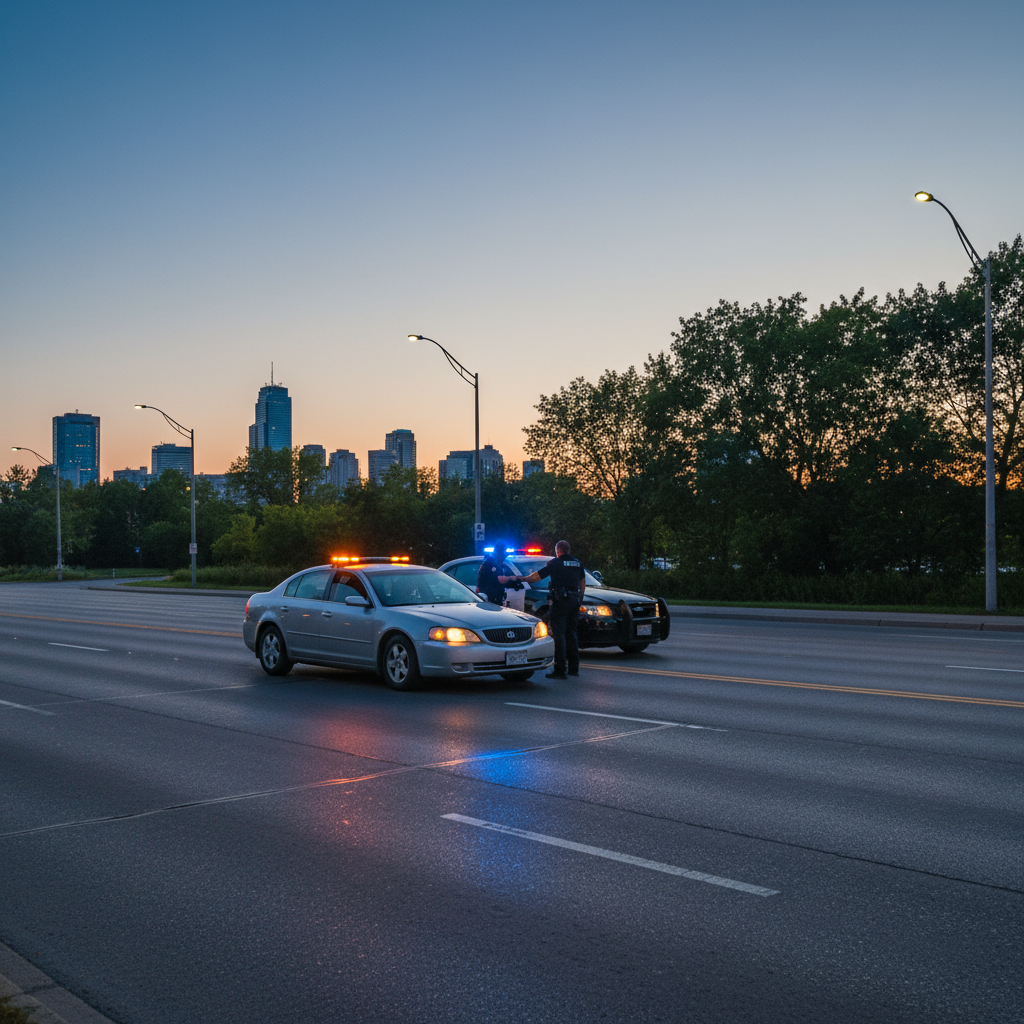
Stunt driving charges in Canada are serious provincial offenses that trigger immediate roadside penalties and long-term consequences. In Ontario, stunt driving refers to racing, performing dangerous maneuvers, or exceeding speed thresholds under section 172 of the Highway Traffic Act. Penalties include a 14-day vehicle impound and 30-day license suspension at the roadside, with potential court suspensions and more.
Quick Answer
Stunt driving charges Canada carry immediate Ontario penalties: 14-day vehicle impound and 30-day roadside license suspension, plus possible court suspensions and a record. If you were stopped near our Brampton office at 106-2250 Bovaird Drive East, Rathod Law Firm’s Traffic Violations team defends stunt driving, speeding, red light, and suspended license cases.
Above the Fold: Why This Guide Matters + What You’ll Learn
This guide explains Ontario stunt driving laws in clear steps: what qualifies, what happens at the roadside, how court works, and proven defense paths. You’ll get checklists, timelines, and local tips so you can act quickly and protect your license and record.
- What you’ll get:
- Plain-English overview of Ontario’s stunt driving rules and thresholds
- Exact roadside consequences and court pathways, step by step
- Defense timelines, disclosure checklists, and plea decision frameworks
- Local tips for Brampton, Highway 410/407, and Bovaird Drive East
- When to involve a lawyer or licensed paralegal—and how we help
- Who this is for:
- Ontario motorists facing racing or stunt driving allegations
- New drivers and G2 holders who risk prolonged suspensions
- Professionals whose licenses are essential for work and family
- How to use it:
- Skim the summary next, then jump to sections via the table of contents
- Use our checklists to organize disclosure and court dates
- Book a legal consultation to align strategy with your facts
At a Glance (Summary)
- Immediate penalties: 14-day impound + 30-day roadside license suspension.
- Speed thresholds: 40 km/h over in posted limits under 80 km/h; 50 km/h over at 80+ km/h; or 150 km/h absolute.
- Other conduct: Racing, drifting, burnouts, wheelies, or other dangerous exhibitions.
- Court outcomes: Potential license suspension (1–3+ years for first conviction), probation terms, and up to six months’ jail for the most serious cases.
- Defense path: Request disclosure early, assess dash/body-cam evidence, test device operation and traffic stop grounds, and consider resolution vs. trial.
- What Is Stunt Driving in Ontario?
- Why Stunt Driving Charges Matter
- How the Process Works (Roadside to Court)
- Types of Stunt Driving and Related Offenses
- Best Practices After You’re Charged
- Tools, Documents, and Resources
- Case Studies and Local Examples
- Frequently Asked Questions
- Conclusion and Next Steps

What Is Stunt Driving in Ontario?
Stunt driving in Ontario is a Highway Traffic Act offense that includes racing, dangerous exhibitions of speed, and specific speed thresholds. A charge triggers immediate roadside penalties—14-day impound and 30-day license suspension—and may result in a court-imposed suspension if convicted. The law applies across Ontario highways and city roads.
- Core legal basis:
- Ontario’s Highway Traffic Act (HTA) section 172 governs racing/stunt driving.
- Regulations (e.g., O. Reg. 455/07) list conduct like burnouts, drifting, wheelies, and racing side-by-side.
- Speed-based stunt thresholds are clearly defined by posted limits.
- Speed thresholds (numbers matter):
- 40 km/h over in zones under 80 km/h
- 50 km/h over in zones 80 km/h or higher
- 150 km/h or more—regardless of the posted limit
- Non-speed conduct that still qualifies:
- Racing another vehicle or timing oneself
- Exhibition of speed: burnouts, drifting, fishtailing, doughnuts
- Dangerous maneuvers: wheelies, sitting on part of the vehicle not meant for seating
- Immediate, measurable consequences:
- 14-day vehicle impound—towing and storage at owner’s risk
- 30-day roadside license suspension—effective immediately
- Paperwork includes a Notice of Suspension and an impound receipt
Self-contained answer (SCU): Ontario defines stunt driving broadly: it covers racing, dramatic speed displays, and exceeding set speed thresholds (40 km/h or 50 km/h over, or 150 km/h+). The moment you’re charged, your vehicle is impounded for 14 days and your driver’s license is suspended for 30 days. These penalties apply before any court date and can’t be appealed roadside.
Why Stunt Driving Charges Matter
Stunt driving allegations can disrupt your job, insurance, and mobility instantly. The roadside impound and license suspension take effect immediately, and a conviction risks a multi-year court suspension. For G2 drivers and professionals who commute, the practical fallout is swift and costly in time and opportunity.
- Immediate life impact:
- No access to your vehicle for 14 days while it’s impounded
- 30-day license suspension affects work commutes and caregiving
- Potential employment issues for positions requiring a clean abstract
- Record and insurance realities:
- Convictions under the HTA can remain on your record for years
- Insurers reassess risk after serious traffic convictions
- Secondary consequences can include mandatory high-risk coverage tiers
- Court-imposed suspensions (time frames):
- First conviction: court may impose a 1–3+ year suspension
- Repeat convictions: longer suspensions; lifetime possible for multiple offenses
- Maximum jail up to six months in the most serious circumstances
- Why timely legal help matters:
- Early disclosure requests preserve evidence and timelines
- Challenging device accuracy, stop grounds, and officer notes takes preparation
- Resolution discussions are stronger when grounded in file-specific weaknesses
SCU: Stunt driving matters because it triggers penalties on day one—your car is impounded and your license is suspended. If convicted, the court can add a multi-year suspension and other sanctions. Insurance providers also reevaluate you as a higher risk. Responding fast—with disclosure requests and counsel—protects your options.
How the Ontario Stunt Driving Process Works
Expect two phases: roadside and court. Roadside, officers seize your plates, impound the vehicle for 14 days, and suspend your license for 30 days. Court then follows, where disclosure, pre-trials, and possible trial determine whether the Crown proves the offense or a resolution is reached.
- Phase 1: Roadside actions (happen within minutes):
- Officer alleges stunt/racing based on conduct or speed threshold
- Vehicle towed for a mandatory 14-day impound
- 30-day roadside license suspension issued immediately
- Paperwork includes court date and suspension notice
- Phase 2: Court pathway (timeline you can influence):
- Disclosure request submitted promptly (officer notes, device logs, video)
- First appearance and early resolution or case management discussions
- Pre-trial to narrow issues or discuss resolution
- Trial where Crown must prove offense beyond a reasonable doubt
- Evidence themes we examine:
- Officer observations and training; consistency of notebook entries
- Laser/radar calibration, testing logs, and operational compliance
- Dash-cam/body-cam video clarity and continuity of evidence
- Traffic, weather, signage, and sightline conditions at the scene
SCU: After a stunt driving stop, two tracks start: immediate penalties and a court case. You should request disclosure fast, review officer notes and device logs, and prepare for resolution or trial. The Crown must establish the elements of stunt driving beyond a reasonable doubt; strategic defenses aim to create reasonable doubt or a safer resolution.
Types of Stunt Driving and Related Offenses
Ontario categorizes stunt driving by conduct and speed. Racing or performing risky maneuvers counts, as do set speed thresholds. Related charges like careless or dangerous driving may be laid depending on facts. Understanding differences helps you plan defense and anticipate penalties.
- Speed-based stunt driving:
- 40 km/h over in posted limits under 80 km/h
- 50 km/h over in posted limits of 80 km/h or higher
- Absolute threshold: 150 km/h or higher
- Conduct-based stunt driving:
- Racing, blocking other vehicles, or chasing
- Exhibition maneuvers: burnouts, drifting, doughnuts, wheelies
- Unsafe positioning: driver or passenger sitting improperly while moving
- Related offenses you might see:
- Careless driving (HTA): driving without due care or attention
- Dangerous driving (Criminal Code): criminal standard; Crown must prove danger to the public
- Speeding tickets: standard speeding where thresholds don’t meet stunt
| Offense | Trigger | Immediate Penalties | Possible Court Outcomes |
|---|---|---|---|
| Stunt/Racing (HTA s.172) | Racing, exhibition, or threshold speeds | 14-day impound; 30-day license suspension | Multi-year suspension; fines; up to 6 months’ jail |
| Careless Driving (HTA) | Driving without due care/attention | None at roadside (varies) | Fines; possible suspension; demerit points |
| Dangerous Driving (Criminal) | Marked departure from care standard | Arrest; vehicle seizure possible | Criminal conviction; prohibitions; potential jail |
SCU: Stunt driving spans speed thresholds (40/50 km/h over, or 150+ km/h) and dangerous performance conduct. It’s distinct from careless driving (provincial) and dangerous driving (criminal). Knowing your exact allegation guides the evidence you’ll need—like radar logs for speed or video for alleged maneuvers.
Best Practices After a Stunt Driving Charge
Act within 7–10 days: record details, request disclosure, and note deadlines. Prepare for your first appearance with a clean, organized file. Early legal advice helps you decide between resolution and trial strategies based on the strength of evidence and your license risks.
- Capture facts while fresh:
- Write a timeline (where, speed shown, traffic, weather, signage)
- List passengers/witnesses and their contact details
- Photograph signage, road conditions, and sightlines if safe to do so
- Request disclosure promptly:
- Officer notes, radar/laser testing logs, dash/body-cam video, calibration records
- Maintenance history of the device and operator training credentials
- Any supplemental reports, diagrams, or 911 records if applicable
- Organize for court:
- Keep a binder: summons, disclosure index, correspondence, key exhibits
- Calendar deadlines: appearance date, pre-trial, motion dates
- List resolution terms you’d consider vs. trial goals
- Work with counsel strategically:
- Assess stop legitimacy, device operation, and officer recollection
- Identify evidentiary gaps or Charter issues to leverage at pre-trial
- Weigh resolution options that protect your license and long-term record
SCU: The best first step is to document everything and secure disclosure. With the roadside penalties already active (14-day impound and 30-day suspension), your near-term goal is to prepare for court. A structured file, clear objectives, and early legal input improve outcomes at pre-trial and trial.
Local Tips
- Tip 1: Speed enforcement on Highway 410 and Highway 407 is frequent near on-ramps and lane merges. If you were stopped along Bovaird Drive East, record signage and traffic flow near 106-2250 Bovaird Drive East to preserve details.
- Tip 2: Winter visibility and braking distances in Peel Region change quickly. Photograph snowbanks, salt lines, and lane markings soon after the stop to capture conditions that may aid your defense.
- Tip 3: For professional drivers in Brampton and Mississauga, request full device logs and any video early—tight delivery schedules often intersect with alleged threshold speeds, and context matters at pre-trial.
IMPORTANT: These tips support—not replace—legal advice. Bring your notes to a consultation so we can evaluate them against the disclosure file.
Tools, Documents, and Resources
Your defense toolkit starts with paperwork: the summons, suspension notice, and impound documents. Add disclosure (officer notes, device logs, video), your scene photos, and a timeline. Organize these in a binder or digital folder so pre-trial discussions are efficient and focused.
- Essential documents to request and keep:
- Summons/Offense notice with court date
- Roadside suspension letter and impound receipt
- Officer’s handwritten notes and typed reports
- Laser/radar device make, model, serial, calibration, and daily test logs
- Dash-cam/body-cam video; any diagrams or photos taken by police
- Practical organization:
- Label sections: Timeline, Evidence, Correspondence, Resolutions, Trial
- Use a disclosure index and number each page for fast reference
- Backup to cloud storage and keep a physical copy for court
- Insurance context (general education):
- Serious traffic convictions can affect future coverage eligibility
- Understanding policy types helps when comparing providers later; see a general overview of auto insurance coverage types for context
- If your insurer reclassifies your risk, shopping options may be necessary; consider a primer on choosing auto insurance in Ontario
SCU: Build a lean but complete defense file. Start with the summons, suspension, and impound documents, then add full disclosure—notes, device data, and any video. Keep an indexed binder and a digital backup. Understanding insurance basics helps you plan life after the case, independent of the legal strategy.

Case Studies and Local Examples
Every file turns on evidence. Two Brampton scenarios show how outcomes differ: one speed-threshold stop on Highway 410, and one exhibition-of-speed allegation near an industrial park. Device integrity, signage, and video clarity were decisive in shaping results.
- Highway 410 threshold speed stop (illustrative):
- Allegation: 50 km/h over in an 80 km/h zone at night
- Key evidence: laser device logs, officer’s pre/post-use tests, dash video
- Defense themes: sightlines from the median, beam divergence, traffic density
- Outcome driver: daily testing records and unobstructed target confirmation
- Exhibition of speed near Bovaird Drive East (illustrative):
- Allegation: rapid acceleration and brief fishtail leaving a plaza
- Key evidence: officer notes; no video; ambiguous tire mark photos
- Defense themes: surface conditions, load shift, recent snowfall, tire tread
- Outcome driver: lack of corroborating video and uncertain surface friction
- What these show:
- Speed cases hinge on device operation and unbroken identification of the target vehicle
- Conduct cases hinge on reliable, contextual observations—video helps, ambiguity hurts
- Local conditions (weather, signage, lane markings) often tip marginal cases
SCU: Results depend on proof quality. In speed-threshold cases, the reliability of the device test logs and sightline clarity often decide negotiations. In exhibition cases, video corroboration—or the lack of it—can be pivotal. Local conditions around Brampton frequently become decisive facts.
Need a Strategic Review?
Rathod Law Firm’s integrated lawyer–paralegal team defends stunt driving, speeding, red light, and suspended license cases. Bring your timeline and disclosure for a focused strategy session—either in person at our Brampton office or via our online booking system.
Frequently Asked Questions
Roadside penalties apply immediately and don’t predetermine your court result. You can still fight the charge by requesting disclosure, exploring resolution, or proceeding to trial. The best approach depends on evidence strength and your license risk profile.
- How long do I have to act?
Act within days. File your disclosure request promptly, note your first appearance date, and keep all paperwork together. Early requests help ensure video and testing logs are preserved and disclosed before pre-trial discussions.
- Will a stunt driving conviction affect my insurance?
Serious traffic convictions often prompt insurers to re-rate drivers as higher risk. While outcomes vary by provider, expect your policy options and premiums to be reevaluated. Understanding coverage types and shopping options can help you plan next steps.
- Should I negotiate or go to trial?
It depends on the evidence. If device logs are weak or video undermines the allegation, trial leverage increases. Where evidence is strong, a negotiated resolution may limit long-term license and record exposure. Legal advice is key to choosing wisely.
- What if I’m a G2 or new driver?
New drivers face compounding consequences from suspensions. Protecting your driving privileges early is critical. A focused defense—testing device integrity, examining stop grounds, and documenting conditions—can improve resolution discussions or trial prospects.
- Can I represent myself?
You can, but these cases are technical. Device operation, disclosure scope, and evidentiary rules matter. Many drivers prefer working with a lawyer or licensed paralegal who handles stunt driving files routinely and understands local courts.
Conclusion and Next Steps
Ontario stunt driving cases move fast at the roadside and slower in court. Your best move is to document facts immediately, request full disclosure, and get legal guidance early. A structured, evidence-led approach protects your license and sets up stronger negotiations or trial outcomes.
- Key action items:
- Write your timeline and collect scene photos within 24–48 hours
- Request complete disclosure: notes, device logs, and any video
- Prepare for pre-trial with organized, indexed documents
- Book a legal consultation to align defense with your goals
- Key takeaways:
- Roadside penalties are immediate: 14-day impound, 30-day suspension
- Thresholds: 40 km/h over (under 80), 50 km/h over (80+), or 150+ km/h
- Success often turns on device testing, video, and local conditions
If you were charged in Brampton, Mississauga, or anywhere in Ontario, our team can help you navigate disclosure, pre-trial, and trial—backed by a lawyer and licensed paralegal working together on your file.
Related Topics to Explore
- Understanding disclosure in Ontario Provincial Offences matters
- How roadside suspensions differ from court-imposed suspensions
- Preparing for your first appearance: what to bring and expect