

07
JulFight a Traffic Charge with a Lawyer: Protect Your License (2026)
A traffic offense lawyer is a legal professional who defends motorists against provincial traffic charges to protect their license, record, and insurance. In Ontario, quick action matters: you typically have 15 days to respond to a ticket, request a meeting, or dispute it. Strategic defense can reduce points, avoid suspensions, and keep you driving.
By Kapil Rathod — Principal Lawyer, Rathod Law Firm • Last updated: July 7, 2026
At a Glance
This guide explains how a traffic offense lawyer helps you challenge tickets and serious driving charges in Ontario. You’ll learn deadlines, common defenses, courtroom steps, and when to use paralegal support. Use this as a step-by-step playbook from roadside stop to final resolution.
If you were ticketed or charged, you’re not alone—and you’re not stuck with one option. This complete guide shows how our Ontario-based team at Rathod Law Firm approaches traffic defense from the first call to closing a case.
- What a traffic offense lawyer does and why it matters
- Exact steps to take in the first 72 hours
- How tickets move through Ontario’s court system
- Defenses for speeding, red-light, careless, handheld device, and more
- When paralegal representation is effective and efficient
- How convictions affect demerit points, insurance, and employment
What Is a Traffic Offense Lawyer?
A traffic offense lawyer represents drivers facing provincial offenses like speeding, red-light, careless, or stunt driving. They assess disclosure, identify legal errors, negotiate with prosecutors, and argue in court to reduce fines, demerit points, or suspensions, aiming to protect your license and record.
In plain terms, a traffic offense lawyer defends your ability to drive. That means reading the facts, testing the evidence, and speaking for you so you don’t say the wrong thing under pressure. In Ontario, many tickets can be contested without you stepping foot in court.
What we handle at Rathod Law Firm
- Speeding and red-light tickets: From handheld device allegations to amber/red entries.
- Careless or stunt driving: High-risk charges with immediate roadside penalties.
- Suspended license issues: Alleged driving while suspended or administrative mix-ups.
- Paralegal representation: Cost-effective advocacy for many Provincial Offenses matters.
Our integrated team structure—led by Principal Lawyer Kapil P. Rathod with licensed paralegal support—lets us scale the right experience to the right case. Many matters resolve through targeted negotiations when the disclosure file doesn’t support the original charge.
Why a Lawyer Matters in Ontario
Legal representation helps you avoid avoidable convictions, manage demerit exposure, and reduce insurance risk. In Ontario, you generally have 15 days to respond to a ticket, and some charges (like stunt driving) trigger immediate suspensions and impounds, making early strategy essential.
Ontario’s traffic regime moves quickly. For some offenses, roadside actions begin before you ever see a courtroom. Stunt driving, for example, can bring an immediate 30-day license suspension and 14-day vehicle impound at the roadside, with court to follow. That’s why timing is everything.
Consequences that stack up
- Demerit points: Common moving violations carry roughly 3–6 points; hit certain thresholds and suspension letters follow.
- Insurance: Even a single conviction can affect premiums for multiple years, especially for novice or commercial drivers.
- Employment: Professional drivers and gig workers risk lost shifts or contract terminations after convictions.
Here’s the thing: a conviction is not the only outcome on the table. With a properly prepared file, you can often secure a reduced charge, fewer points, or a non-moving alternative. We regularly use paralegal advocacy for straightforward tickets and elevate to lawyer-led defense for complex, high-stakes matters.
Local considerations for Ontario
- Plan travel to court or meetings around Professor’s Lake Park traffic flows on sunny weekends; area congestion can surprise drivers.
- Summer enforcement often ramps up near community hubs like Empire College Canada; expect more roadside stops during peak hours.
- Bring original ID and any calibration notes or maintenance records you have; organized paperwork speeds disclosure review and strategy.
How the Ontario Traffic Process Works
Respond to a ticket within about 15 days, request disclosure, and choose a resolution path: early resolution, trial, or negotiations. Serious charges add immediate penalties. A lawyer or paralegal manages filings, analyzes evidence, and advocates to reduce points, suspensions, or convictions.
While every case is unique, the process follows predictable beats. Understanding the flow helps you avoid missed deadlines and rushed choices. We map the journey below from stop to resolution.
Step-by-step timeline
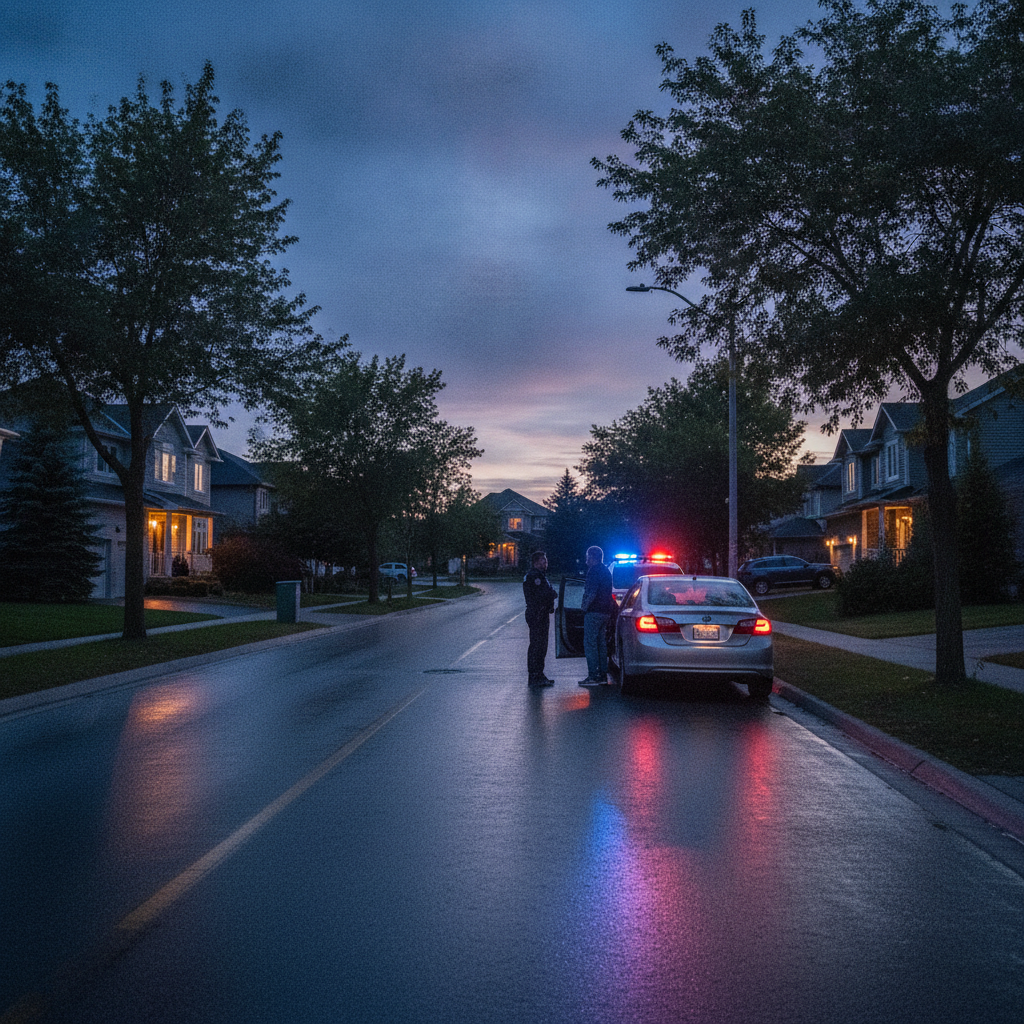
- Roadside stop: Stay calm, provide license/ownership/insurance. Don’t argue facts; save details for counsel.
- Review the notice: Provincial Offense Notice typically gives you ~15 days to choose an option.
- Choose your path: Early resolution, trial option, or meeting with prosecutor. We assess which yields the best outcome.
- Request disclosure: Get officer notes, device logs, and any video. Missing or late disclosure can change strategy.
- Analyze technicalities: We examine signage visibility, device calibration cycles, officer training, and identification.
- Negotiate or set trial: Many files resolve pre-trial with reduced charges or points.
- Hearing/trial: Present arguments, cross-examine, and challenge the Crown’s case. Remote attendance is sometimes possible.
- Outcome and record: Document the result; monitor demerit and insurance impacts; plan next steps if appeals are viable.
Your first 72 hours: do this
- Photograph the scene, weather, and any obstructed signs.
- Write a fresh timeline while details are clear.
- Secure witnesses and dashcam footage if available.
- Book a consult with defense counsel or paralegal to preserve deadlines.
| Decision Point | DIY | With Lawyer/Paralegal |
|---|---|---|
| Time investment | Multiple visits, self-managed filings | Delegated filings and appearances |
| Success likelihood | Depends on your prep and comfort | Guided by training and prior cases |
| Penalty exposure | Easy to accept harsh terms | Negotiations target fewer points |
| Stress level | High—learn as you go | Managed—clear playbook |
| Appeal posture | Limited record of objections | Preserved issues for appeal |
Types of Charges and Common Defenses
Speeding, red-light, handheld device, careless, stunt driving, and suspended-license allegations each demand tailored defenses. Successful strategies challenge device accuracy, officer observations, signage, identification, or procedure, and negotiate to reduce points or amend charges.
Not all tickets are created equal. Some hinge on devices; others rely on human observations. Your defense must match the Crown’s proof theory.
Speeding
- Evidence: Radar, lidar, or pacing; officer notes and calibration records.
- Defenses: Calibration gaps, beam interference, unclear identification, or obstructed speed signage.
- Points snapshot: Ontario commonly assigns 3 points in lower bands and up to 6 points at high excess speeds.
Red-light and amber entries
- Evidence: Officer view or camera logs; lane position and timing matter.
- Defenses: Line-of-sight issues, unsafe stop conditions, or improper lane identification.
- Practice tip: Photos showing road markings and signal placement are powerful.
Handheld device (distracted driving)
- Evidence: Visual observation of device use while driving or at a stop in traffic.
- Defenses: No active use, device not “held,” or emergency exceptions; dashcam angle can help.
- Impact: Convictions can trigger escalating penalties and longer insurance effects.
Careless driving
- Evidence: Descriptions of undue care; collisions; witness statements.
- Defenses: Alternate explanations, evasive actions taken, or lack of corroboration.
- Risk: Typically up to 6 demerit points exposure when proven.
Stunt driving / street racing
- Evidence: Speed threshold, maneuvers, or deliberate loss of traction.
- Ontario thresholds: 40 km/h over on roads under 80 km/h, and 50 km/h over elsewhere.
- Immediate penalties: 30-day license suspension and 14-day vehicle impound at roadside.
Driving while suspended
- Evidence: Registrar data, prior notices, and traffic stop circumstances.
- Defenses: Notice and administrative error challenges; necessity arguments are narrow.
- Action: Investigate why the suspension occurred and cure the root cause fast.
Best Practices to Protect Your License
Act within 72 hours, preserve evidence, request disclosure early, and avoid casual admissions. Use paralegal support for straightforward tickets and escalate to a traffic offense lawyer for complex or high-stakes charges to reduce points and safeguard insurance.
Good outcomes start with good habits. The right moves in week one often decide whether you’re negotiating from strength or scrambling on deadline day.
Immediate moves
- Calendar your ~15-day ticket response window; missing it can default you into a conviction.
- Request disclosure early; late files sometimes justify adjournments or better terms.
- Keep all paperwork together: notice, photos, witness details, and any dashcam clips.
What not to do
- Don’t email prosecutors with admissions trying to “explain” the incident.
- Don’t miss disclosure deadlines; chasing last-minute files hurts leverage.
- Don’t assume camera tickets are unbeatable; technical defenses exist.
When to involve a lawyer vs. paralegal
- Use paralegal support for routine speeding, stop-sign, and many handheld cases where negotiation history helps.
- Use a lawyer for collisions, careless, stunt driving, suspended-license allegations, or anytime employment is at stake.
- Team model: At Rathod Law Firm, we route files to the right advocate, then regroup if facts escalate.

Tools and Resources for Drivers
Combine accurate deadlines, organized evidence, and credible training resources to strengthen your case. Defensive driving courses, safety refreshers, and insurance guidance help mitigate risk during and after a traffic charge in Ontario.
Having the right tools reduces stress and shows good faith if negotiations arise. Here are practical resources we see clients use effectively.
Practical resources
- Consider a defensive driving course to reinforce safe habits after a ticket.
- Review safe following practices such as handling tailgating safely to prevent future allegations.
- Understand how convictions can affect premiums with an overview of auto insurance in Ontario.
Keep receipts or completion proofs for any training you complete. While not a guarantee, they can support a resolution proposal or demonstrate rehabilitation when the Crown weighs options.
How a Lawyer Builds Your Defense
Defense work tests the Crown’s proof from every angle: disclosure quality, device maintenance, officer training, signage, and identification. A strong file uses contradictions to negotiate reductions or win at trial while preserving issues for appeal.
In our experience, three pillars drive most successful resolutions: evidence control, technical challenges, and credible storytelling.
Evidence control
- Track disclosure dates and completeness; create follow-ups where gaps exist.
- Index all exhibits (photos, maps, calibration entries) for quick reference in negotiations.
- Prepare a concise theory of the case; short summaries get read, long ones don’t.
Technical challenges
- Question the maintenance cycle and logs for radar/lidar devices.
- Document sightline issues and sign placement with measurements and photos.
- Assess officer vantage points and traffic density at the precise time of stop.
Credible storytelling
- Highlight evasive steps you took to avoid risk rather than excuses.
- Bring corroboration: witness notes, dashcam timestamps, and consistent timelines.
- Offer reasonable alternatives, like a non-moving amendment that still signals accountability.
Real-World Examples from Our Practice
Case outcomes often hinge on disclosure gaps, device records, and credible mitigation. Our team blends paralegal efficiency with lawyer oversight to convert weak proof into reduced charges or, when warranted, withdrawals.
We serve drivers across Ontario from our Brampton base. Here are anonymized snapshots that reflect day-to-day results.
- Speeding with unclear signage: Photos showed foliage blocking a limit sign. Negotiations produced a no-points amendment aligning with the evidence issues.
- Handheld device in stop-and-go traffic: Dashcam timing revealed the vehicle was stationary. The Crown accepted a reduced charge based on the stationary-motorist nuance.
- Careless after a near-miss: Witness statements supported that evasive action prevented a collision. The matter resolved to a basic moving violation with lower point exposure.
- Stunt allegation near a busy park: Congestion data and angles near the Professor’s Lake Park area undercut the pace estimate. We secured a substantial amendment.
Outcomes vary with facts. The common thread is disciplined preparation—tight timelines, complete disclosure, and evidence that speaks for you before you ever step into a courtroom.
Need calm, clear guidance? Our integrated lawyer–paralegal team handles routine tickets through high-stakes charges. Book a consultation to map your options and deadlines.

DIY vs. Hiring a Traffic Offense Lawyer
DIY works for simple tickets when time and research are on your side. A traffic offense lawyer adds leverage on complex files, preserves appeal issues, and often secures fewer points or a better amendment—especially for collisions, stunt driving, or suspended-license allegations.
Both paths can succeed, but the hidden variable is experience. Knowing what evidence persuades a prosecutor—and what doesn’t—saves appearances and avoids avoidable convictions.
| Factor | DIY Path | Traffic Offense Lawyer |
|---|---|---|
| Preparation load | Research rules, draft submissions yourself | Guided file strategy and drafting |
| Negotiation power | Limited to your experience | Built on prior resolutions |
| Point reduction odds | Variable | Historically stronger in complex cases |
| Time away from work | Multiple appearances likely | Many appearances handled for you |
| Appeal readiness | Procedural missteps common | Issues preserved in record |
Frequently Asked Questions
Quick answers to common questions about tickets, deadlines, points, and when to hire a traffic offense lawyer in Ontario. These concise responses help you act fast and protect your license.
How long do I have to fight a ticket in Ontario?
Most Provincial Offense Notices list about 15 days to respond. Options include early resolution, trial, or meeting with a prosecutor. Act quickly; missing the window can lead to a default conviction. Always check your notice for the precise deadline.
Will a traffic conviction affect my insurance?
Insurers weigh convictions for several years. Even one moving violation may raise premiums, and multiple convictions can compound the effect. Taking driver training and avoiding point-heavy offenses can help your longer-term profile.
Do I need a lawyer for a first ticket?
Not always. Straightforward tickets sometimes resolve well with experienced paralegal help. If there was a collision, a high-speed allegation, a suspended license issue, or potential job impact, speak with a lawyer before choosing your path.
What if disclosure is incomplete?
Ask for the missing items in writing and record your request date. Incomplete disclosure can justify adjournments or support negotiations. A defense representative will track gaps and decide whether to proceed, adjourn, or challenge at hearing.
Can I avoid demerit points?
Sometimes. Negotiations may produce a reduced charge with fewer or no points, especially when evidence is weak or you show rehabilitation steps. Outcomes depend on facts, your record, and prosecutor policies in your jurisdiction.
Key Takeaways
Respond within 15 days, gather evidence, and get advice early. For complex files or career-sensitive driving, a traffic offense lawyer improves your leverage, targets fewer points, and protects your record and insurance profile.
- Deadlines are short—calendar your response immediately.
- Evidence wins cases: photos, logs, and timelines matter.
- Paralegals handle many tickets efficiently; lawyers steer high-risk files.
- Negotiations can reduce points and insurance exposure.
- Preparation beats panic—start within 72 hours of the stop.
Conclusion
You don’t have to accept the first outcome on a traffic charge. With a clear plan, timely filings, and focused advocacy, many drivers reduce points, avoid suspensions, or secure better amendments—keeping their license and livelihood intact.
If you’re in Ontario and facing a ticket or serious allegation, our Brampton-based team at Rathod Law Firm can help you act within deadlines, read the file correctly, and choose the right forum. Ready to move? Book a conversation and let’s protect your license—today.